
1.
Is there an end to HIV in Africa?
Equity in Global Climate Change Policy
Reflections from nearly two decades across HIV programming, adolescent health and systems stewardship in Africa
The 26th International AIDS Conference in Rio de Janeiro ended a few days ago. I have been sitting with the UNAIDS Special Report, United to End AIDS, and with the layered picture it offers of the global response.In 2025, 41 million people were living with HIV, and 32.1 million were receiving antiretroviral treatment.
New HIV acquisitions and AIDS-related deaths reached their lowest levels in more than thirty years. During the same year, 1.2 million people acquired HIV, 570,000 people died from AIDS-related illnesses, and around 9 million people living with HIV remained outside treatment. Children carried a particularly sharp disparity: treatment reached 78 per cent of all people living with HIV and 55 per cent of children living with HIV.
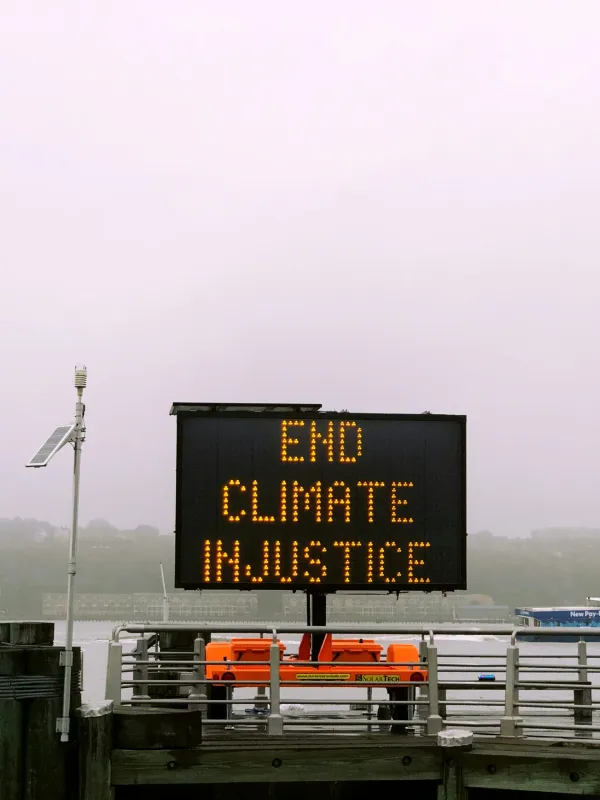
The 21st Century has seen rapid globalisation, drawing attention to social, economic, political and cultural differences that exist between “developed” and “developing” countries. These differences were previously concealed by the geographical and technological distances between these regions. Globalisation, however, has put a spotlight on the interconnectedness of all nations of the world, as exemplified by world events that have occurred in the past 5 years, such as the Covid-19 pandemic and the Ukraine- Russia war among others. Never has it been more apparent that a ‘global commons’ exists that requires the stewardship of all who enjoy it.
3.
Data, Dimes & Decisions: A Glance At The Effects Of Funding Disruptions On Gender Equality Programs
In 2022, the UNDP reported that the Gender Inequality Index (GII) in Sub-Saharan Africa was at 0.56, the highest in comparison to other global regions in the world (Yeboua, 2024). The data points to glaring gender gaps that have worsened over the years with the rise of geopolitical shifts, conflict and climate change. While there has been an improvement since 2006, the gender parity score in 2024 stood at 68.4% in Sub-Saharan Africa.
4.
Building Movements: Considerations for Collective Action
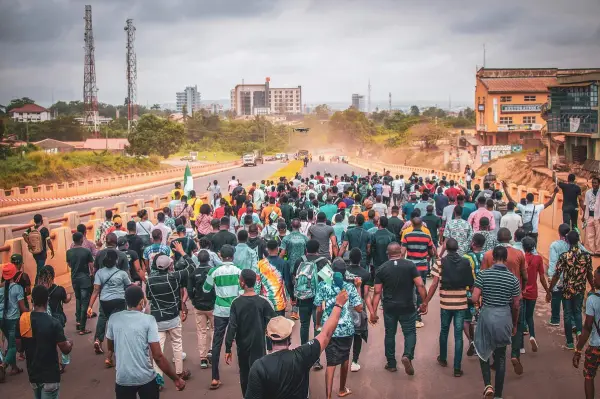
How does one navigate a shrinking civic space and roll-back on rights? What do we do when increasing authoritarianism or nationalism endangers or silences certain groups of people and narratives? None of these are experiences unique to the second decade of the 2000s, just as the tumultuous colonial period was reflected in the African zeitgeist. Countries all over the world are experiencing changes in their sociopolitical spaces, driven by a variety of complex and interconnected factors like unprecedented technological advancement, loss of trust in democratic structures, the excesses of capitalism, and structural inequality that does not improve with economic growth.
5.
Sharing Power in Research | A Journey Towards Equitable Knowledge Systems
For too long, research has been dominated by knowledge systems rooted in the West. These ways of knowing have often excluded or undermined indigenous, local, and community-held wisdom. Imagine knowledge as a vast tree. For centuries, only certain branches, those that fit Eurocentric categories, were allowed to flourish, while others were trimmed back or erased.
6.
The Digital Frontier of Violence
The digital realm has become a new frontline for crisis in Kenya, with recent studies showing that approximately 90% of students in Institutions of Higher Learning in Nairobi, Kenya have witnessed Technology-Facilitated Gender-Based Violence (TFGBV). 39% of this demographic, have personally experienced TFGBV, with female students bearing the brunt of this form of violence. The rapid innovations in technology have turned the world into a global village, making mutual access more convenient. Technology has also complemented, and in other cases replaced the physical aspect of our social engagements.