Last Thursdays
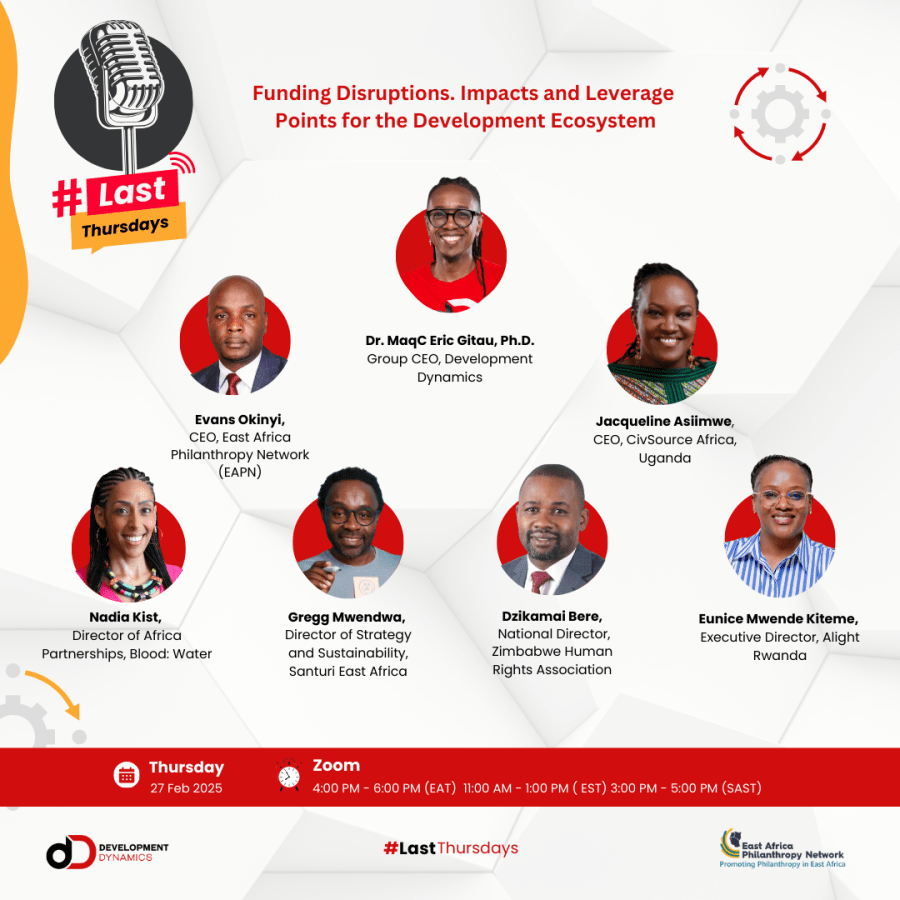
How Do We Measure Impact? Last Thursdays The Ecosystem The social impact and development sector is at a crucial point, with global events, funding shifts, and systemic inequalities challenging traditional methods. Issues like poverty, inequality, and environmental degradation are deeply interconnected, shaping how we measure impact. This session builds on February’s discussion on funding disruptions, focusing on understanding and measuring our role within these ecosystems. Join practitioners, funders, and researchers in rethinking approaches to achieving meaningful, sustainable change. Watch our incredible lineup of guests and hosts for the # LastThursdays February edition, presented by Development Dynamics and the East Africa Philanthropy Network-EAPN. This session will look into it the challenges posed by recent funding disruptions and shifting aid conditions. Together, we’ll explore redefining partnerships as a key advantage point, moving beyond aid dependency to strengthen African sovereignty and sustainable development. Watch it on youtube April 2026 Read More Feb 2025 In the final episode, we partnered with the East Africa Philanthropy… Read More January 2025 In the second episode, we took a step further into… Read More November 2024 The development and social impact space tries to address a… Read More
Movement Building
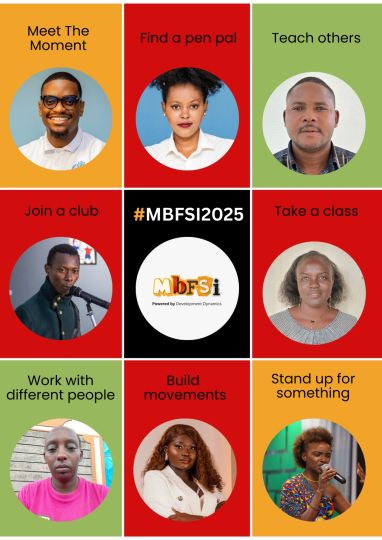
Movement Building for Social Impact Masterclass (MBFSI) equips change makers with practical tools to organise communities around shared challenges and build collective strategies for systemic change. While movement building has proven effective worldwide, its application across Africa remains an untapped opportunity. MBFSI addresses this gap by combining locally rooted solutions with collaborative action frameworks. This immersive masterclass blends human centred design with hands‑on movement practice, enabling participants to confront issues such as inequality and climate change through coordinated action. By connecting diverse stakeholders in a focused learning environment, MBFSI turns individual initiatives into scalable movements and multiplies social impact. Our 2025 Classes MBFSI101: Welcome & Cohort Onboarding Forty change‑makers from across Africa have begun their journey to #MeetTheMoment. The third cohort of the Movement Building for Social Impact Masterclass (MBFSI2025), powered by Development Dynamics, has kicked off a focused 10‑week programme where participants will learn, network, prototype, and take collective action. Over the course, they will gain practical tools and strategies to build resilient, adaptable movements capable of driving sustainable change amid rapid social and political shifts. We are proud to welcome participants from Kenya, Rwanda, Uganda, Tanzania, South Africa, Zimbabwe, Sierra Leone, Botswana, and South Sudan. Cohort participants Esther Keji Ally, Mwamzola Trizah Mudambo, Wangui Kimani, Sube Salesa, Naom Kemunto, Dr. Moronya Asha Hesborn, PhD, Jacob Badolo, Felicity Mudis, Ajak Atem Diing, Eunice Mwende, Peter Lofane, Tinashe Chriswell Chigwena, Ndanji Lesetedi, Patrick Mwadori, Caroline Osik, Eric Muhandia, Nsabiyumva Savin, Winnie Okoth, Diana Nthenya, Tshepo Mokhadi, Eva Kebadile, Tom Ngaragari, Eunice Soline Muthua (CSM®), Francis Edome, Charles Msimbi, Alionya Lammingtone Dodo, Christine Njeru, Eliezer Timaiyo We see you, celebrate you, and cheer you on. This cohort brings together senior decision‑makers and ambitious emerging leaders a powerful mix that will deepen practice, strengthen networks, and accelerate movement‑level impact. MBFSI102: Understanding Social Movements What causes movements to emerge, gain momentum, and reshape history? In MBFSI102 we explored how real change begins when ordinary people recognise a shared injustice and decide not to look away. Using the Iceberg Model, the session unpacked the stages of movement life – Emergence, Momentum, Transformation, and Institutionalisation, and examined how each stage influences a movement’s durability. Facilitator Waithira Kibinda led a close reading of African‑led movements such as #BlueforSudan, #YenAMarre, and #ThisFlag, drawing practical lessons across five dimensions: Structure, Political Opportunity, Identity, Narrative framing, and Environmental justice (SPINE). The discussion connected theory to practice, showing how strategic framing and organisational choices create openings for collective action. We thank the facilitators, thinkers, and changemakers who made the session interactive and generative. May this learning inspire movements that are strategic, rooted in authentic stories, and sustained by solidarity. MBFSI103: Theory of Change for Movements Our third session examined how a clear Theory of Change and a Community of Practice (CoP) model support the growth, evolution, and long‑term sustainability of movements. We revisited insights from MBFSI102 and anchored the discussion in the SPINE framework, which captures the core drivers behind why movements form and endure. Facilitator George Chira walked the cohort through the seven stages of the CoP lifecycle, explaining the conditions that accelerate progress or create barriers at each stage. He illustrated these stages with the Kenya4Resilience story, a group that began as a WhatsApp conversation and matured into a multi‑country CoP through deliberate practice, shared learning, and sustained coordination. To close, Nicholas Mwakuwona offered reflections from Design for Health, highlighting how different levels of Theory of Change (project, designer‑focused, and ecosystem) shape outcomes in global health. These perspectives pushed us to think across disciplines, surface assumptions, and keep the end user central to design and delivery. This session reinforced a simple truth: building for social impact requires holding complexity, practicing collaboration, and staying rooted in community. MBFSI104: Relationship Building 1:1s Our fourth session focused on one of the most powerful pillars of movement building: relationship building. Facilitated by Victor Kimanthi (Senior Associate, Strategic Partnerships and Affiliate Network) with Doris Ndewa Likwelile (MBA) from the Leading Change Network, the session combined clear frameworks with hands‑on practice to deepen how participants form transformational, not transactional, connections. Five‑step relationship framework Attention – notice and prioritise the relationship. Interests – surface shared goals and motivations. Exploration – test alignment and possibilities together. Exchange – offer value and negotiate mutual contributions. Commitment – formalise next steps and shared accountability. Participants practised the framework in paired exercises, modelling each step and building authentic connections in real time. Outcomes from the session Commitments to co‑develop proposals. Follow‑up coffee meetings to align on shared priorities. A stronger sense of care and solidarity across the cohort. Week after week the cohort brings energy and curiosity. We are inspired by the momentum and look forward to seeing these relationships translate into movements that truly #MeetTheMoment. MBFSI105: Narrative and Messaging Facilitators Masha Burina, Leading Change Network; Phelsia Kojwang, Insights Hub Session summary In MBFSI105 we explored how narrative shapes movements and why owning our stories matters. The facilitators guided a calm, focused conversation on how to craft messages that move people from awareness to action. Participants learned o shape narratives that centre people, purpose, and the change they want to see. Core narrative elements Story of Self – Why am I called to lead? Story of Us – What values and experiences do we share? Story of Now – What urgent problem demands collective action? Practical exercise Participants worked in pairs to develop their Story of Self. The exercise used values, leadership moments, and personal challenges to surface authentic motivations and strengthen public storytelling. Session takeaways Use the language of change to make ideas accessible and compelling. Build movement narratives that highlight people, journeys, and the transformation sought. Choose platforms strategically to amplify stories and reach the right audiences. Closing note Strong narratives inspire action, shape public imagination, and sustain movements over time. MBFSI107: Digital Organising, Storytelling & Security Facilitated by Elizabeth Wanda, Week 7 explored how digital organising, storytelling, and security combine to shape contemporary movement building. The session reframed digital spaces as active ecosystems for connection,
Whitepapers
Whitepapers At Development Dynamics, we believe that knowledge is most powerful when shared. We work collaboratively with investors, investees, and intermediaries to bridge knowledge and evidence gaps. Our white papers are a key component of this partnership, offering in-depth analysis of critical development challenges in gender, climate, health, and Democracy Governance Peace and Security(DGPS) and at the intersections of Intersectional Feminism, Monitoring Evaluation Research & Learning(MERL) and Impact Financing. These resources are designed to inform strategy, spark innovation, and drive positive change within the ecosystem. Explore our latest publications below. 1. Intersectional Feminism For Social Impact In Africa This paper explores in detail the current state of intersectional feminist leadership within the social impact sector. Borrowing from the works of renowned feminist scholars like Kimberle Crenshaw, Orie Rogo Manduli, Audre Lorde, Angela Davis, Funmilayo Kuti, and bell hooks, and actors in the social impact space like Njeri Wa Migwi and Adelle Onyango, it examines how intersectional feminist leadership principles are critical in addressing complex intersectional issues. Read The Full Document 2. State Of Triple Threat – A Comparative Analysis For over a decade, we’ve dedicated ourselves to supporting Sexual and Reproductive Health and Rights (SRHR) initiatives across Africa. Witnessing the “triple threat” of HIV infections, unintended pregnancy, and gender-based violence disproportionately impacting young people across the continent has been deeply concerning. It is a crisis that demands immediate and strategic action. Read The Full Document
Analyses, Assesments & Reports
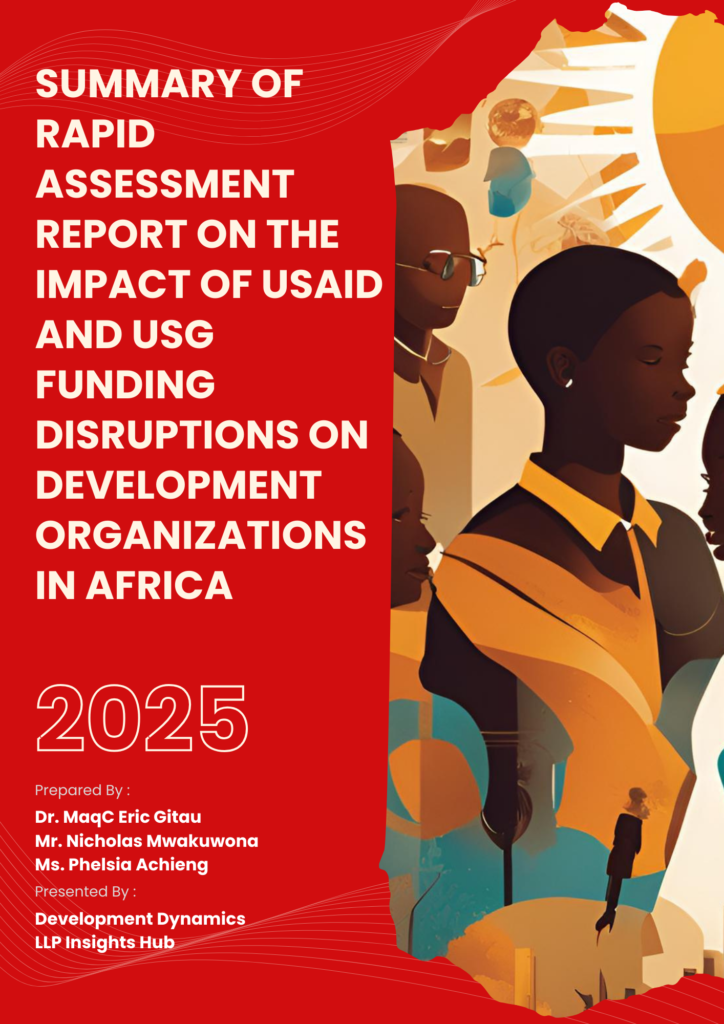
1. The SRHR Funding Situational Analysis 2025–26 The funding environment for Sexual and Reproductive Health and Rights is entering a period of significant uncertainty as 2025 and 2026 approach, with East and Southern Africa especially exposed. This report presents a situational analysis rooted in the emerging realities of 2025 and informed by trends up to 2023. It examines how a convergence of forces, a contracting global Official Development Assistance landscape, rising humanitarian needs driven by economic instability, climate change and conflict, and the growing activity of anti-rights movements is altering both the availability and the effectiveness of SRHR funding. Read The Full Document 2. Impact & Adaptations Of Funding Disruptions Report Since the string of executive announcements started arriving on January 20th, 2025, it’s been a whirlwind of activity, panic, pain, loss, and restrategizing. Data is now more crucial than ever before to effectively navigate the uncertainty and volatility in the current landscape. And so, alongside our partners East Africa Philanthropy Network-EAPN, we conducted a brief survey to better understand the impact of the funding disruptions, identify the common and unique emerging challenges and opportunities, and determine possible support for your organization’s resilience and growth. Find the report here and let us know what stands out for you and how we can partner for a better Africa! Read The Full Document 3. Landscape Analysis – PPPP Framework Public-private partnerships are long-term contracts between a private party (often a company or high net-worth individual) and a government entity (state department or county/district) for providing a public good (asset or service) in which the private party bears significant risk and management responsibility, and remuneration is linked to performance. Public-private partnerships have a long history from Ancient Rome to precolonial Africa, dating back to the 2nd-1st century BCE. Read The Full Document 4. 9th East African Philanthropy Conference (EAPC) Reports The 9th East Africa Philanthropy Conference at Serena Kigali convened funders, practitioners, researchers and policy actors to interrogate how philanthropy measures impact, mobilises domestic resources, and prepares ecosystems for coordinated action. Sessions ranged from critical labs on data, metrics and impact narratives to provocative panels on domestic capital and practical workshops on ecosystem readiness. Across the convening, participants challenged conventional measurement systems, explored pathways to make local capital visible and accountable, and prototyped approaches for building capital that remains rooted in community priorities. These reports capture session summaries, reflections, and practical takeaways for funders and practitioners seeking to align resources with long‑term, locally led change. Get The Full List
Thought Pieces
1. Is there an end to HIV in Africa? Equity in Global Climate Change Policy Reflections from nearly two decades across HIV programming, adolescent health and systems stewardship in Africa The 26th International AIDS Conference in Rio de Janeiro ended a few days ago. I have been sitting with the UNAIDS Special Report, United to End AIDS, and with the layered picture it offers of the global response.In 2025, 41 million people were living with HIV, and 32.1 million were receiving antiretroviral treatment. New HIV acquisitions and AIDS-related deaths reached their lowest levels in more than thirty years. During the same year, 1.2 million people acquired HIV, 570,000 people died from AIDS-related illnesses, and around 9 million people living with HIV remained outside treatment. Children carried a particularly sharp disparity: treatment reached 78 per cent of all people living with HIV and 55 per cent of children living with HIV. Read More The 21st Century has seen rapid globalisation, drawing attention to social, economic, political and cultural differences that exist between “developed” and “developing” countries. These differences were previously concealed by the geographical and technological distances between these regions. Globalisation, however, has put a spotlight on the interconnectedness of all nations of the world, as exemplified by world events that have occurred in the past 5 years, such as the Covid-19 pandemic and the Ukraine- Russia war among others. Never has it been more apparent that a ‘global commons’ exists that requires the stewardship of all who enjoy it. Read More 3. Data, Dimes & Decisions: A Glance At The Effects Of Funding Disruptions On Gender Equality Programs In 2022, the UNDP reported that the Gender Inequality Index (GII) in Sub-Saharan Africa was at 0.56, the highest in comparison to other global regions in the world (Yeboua, 2024). The data points to glaring gender gaps that have worsened over the years with the rise of geopolitical shifts, conflict and climate change. While there has been an improvement since 2006, the gender parity score in 2024 stood at 68.4% in Sub-Saharan Africa. Read More 4. Building Movements: Considerations for Collective Action How does one navigate a shrinking civic space and roll-back on rights? What do we do when increasing authoritarianism or nationalism endangers or silences certain groups of people and narratives? None of these are experiences unique to the second decade of the 2000s, just as the tumultuous colonial period was reflected in the African zeitgeist. Countries all over the world are experiencing changes in their sociopolitical spaces, driven by a variety of complex and interconnected factors like unprecedented technological advancement, loss of trust in democratic structures, the excesses of capitalism, and structural inequality that does not improve with economic growth. Read More 5. Sharing Power in Research | A Journey Towards Equitable Knowledge Systems For too long, research has been dominated by knowledge systems rooted in the West. These ways of knowing have often excluded or undermined indigenous, local, and community-held wisdom. Imagine knowledge as a vast tree. For centuries, only certain branches, those that fit Eurocentric categories, were allowed to flourish, while others were trimmed back or erased. Read More 6. The Digital Frontier of Violence The digital realm has become a new frontline for crisis in Kenya, with recent studies showing that approximately 90% of students in Institutions of Higher Learning in Nairobi, Kenya have witnessed Technology-Facilitated Gender-Based Violence (TFGBV). 39% of this demographic, have personally experienced TFGBV, with female students bearing the brunt of this form of violence. The rapid innovations in technology have turned the world into a global village, making mutual access more convenient. Technology has also complemented, and in other cases replaced the physical aspect of our social engagements. Read More
Hacking The Hyphen
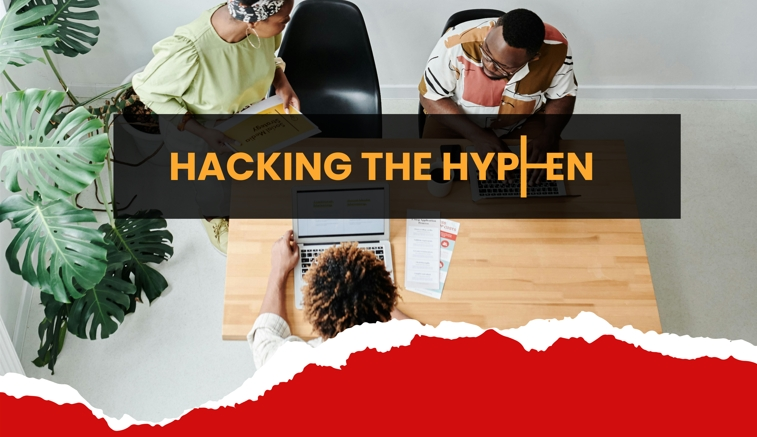
Hacking The Hyphen – DD’s Innovation Challenge Youth in Africa between the ages of 18-29 years face critical issues that stand in the way of developing innovative solutions to urgent and complex challenges at the nexus of Climate Justice, Sexual Reproductive Health & Rights (SRHR), and Gender . At the crux of these issues, is lack of technical capacity and underrepresentation in innovation spheres. There is a growing need to capacitate these youth to support the creation of solutions that will adequately tackle the issues at the intersection of the aforementioned societal themes. Hacking The Hyphen is DD’s annual innovation challenge, aimed at solving challenges at the nexus of Gender, Climate and Sexual Reproductive Health & Rights. We envision a collective of empowered and connected African youth creating impactful and sustainable innovations that address urgent and complex issues at the intersection of Climate justice, SRHR and Gender. In addition, we aim to ensure these innovators are continuously supported by their peers and pioneers in the social impact sector with resources and networks that enable catalytic societal transformation. 2024 Cohort Rawera Ratego – Kenya The Problem Everybody, including those who are most marginalised, should be able to realise their sexual and reproductive health and rights (SRHR) inclusivity in climate action and freedom from S/GBV. Due to high rate of teenage pregnancies in Seme sub county, being top three in Nyanza at 19.6% and low tree coverage Rawera Ratego intends to embrace the use of safe spaces model to sustainably address the triple threat and inclusive climate action in Seme sub county. The Solution Rawera Ratego is a multifaceted, unique and inclusive group. Our safe space model solution is brings a unique experience of meaningful engagement of the youths by giving them a platform to voice out their challenges on SRHR, it also embraces intersectionality in terms of age, race, education, disability and sexual orientation. Being implemented at the community, it is sustainable, impacting and life changing by integrating inclusive climate action, SRHR and gender equality in a hotspot community. Working with youths with compounded vulnerabilities from rural areas along the lake region, most of them lack access to comprehensive SRH information, low literacy level and rampant transactional sex for fish hence susceptible to all forms of vulnerability. Adopting inclusive community safe spaces for this youths with therefore be a milestone step in addressing inclusive climate action,SRHR and gender equality Population Health Education & Development – Malawi Problem Rural communities in Malawi face multiple barriers to sexual and reproductive health that undermine wellbeing and livelihoods. Limited access to comprehensive SRH services is driven by geographic isolation, weak infrastructure, and cultural obstacles. Low awareness about SRH issues fuels misconceptions and stigma, which discourage people from seeking care and information. Solution Community-based SRH programs delivered through youth and young mothers groups, including Tikondwerane, Tionge, Azimayi Patsogolo, Pamoza, and Chimwemwe, to expand family planning and youth-friendly services. Digital health technologies that use social media for SRH education and provide teleconsultation options. Inclusive service delivery through training at Kamwe Health Centre to ensure youth- and disability-inclusive SRH care.